https://www.goodreads.com/review/show/4060207439
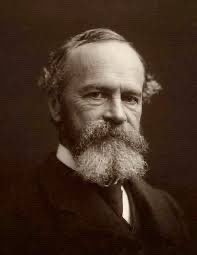
Answer is no, it doesn’t exist as entity but as a function. This Funktion is knowing, and the awareness of this function is „consciousness“. Denialism and illusionism.
The divide: object subject, I and sensations is an illusion.
|||||||||
Excerpts
‘Thoughts’ and ‘things’
contrasted and will always practically oppose to each other. Philosophy, reflecting on the contrast, has varied in the past in her explanations of it
But one day Kant undermined the soul and brought in the transcendental ego, and ever since then the bipolar relation has been very much off its balance.
The transcendental ego seems nowadays in rationalist quarters to stand for everything, in empiricist quarters for almost nothing.
Consciousness is the name of a nonentity, and has no right to a place among first principles.
Those who still cling to it are clinging to a mere echo, the faint rumor left behind by the disappearing ‘soul’ upon the air.
For twenty years past I have mistrusted ‘consciousness’ as an entity; for seven or eight years past I have suggested its non-existence to my students.
mean only to deny that the word stands for an entity, but to insist most emphatically that it does stand for a function.
That function is knowing. ‘Consciousness’is supposed necessary to explain the fact that things not only are, but get reported, are known. Whoever blots out the notion of consciousness from his list of first principles must still provide in some way for that function’s being carried on.
My thesis is that if we start with the supposition that there is only one primal stuff or material in the world, a stuff of which everything is composed, and if we call that stuff ‘pure experience,’ the knowing can easily be explained as a particular sort of relation towards one another into which portions of pure experience may enter. The relation itself is a part of pure experience; one if its
Leave a comment