
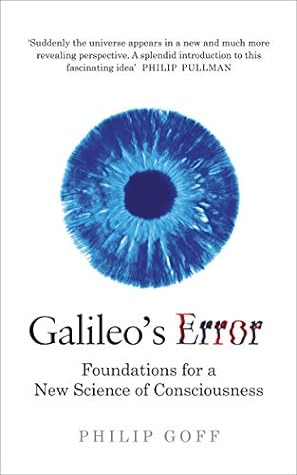
Galileo’s Error: Foundations for a New Science of Consciousness by Philip Goff
The error, according to the author, is when Galileo decided that there are aspects of reality that science can mathematically quantify (size, shape, location and motion of material objects), and others that can’t be described mathematically: subjective, qualitative experiences (like the smell of a flower).
If a tree falls in the forest, does it make a sound when there’s no one to hear it? To Galileo the answer is no. It makes air vibrate, but unless there’s an ear around, these vibrations aren’t sounds. Sound is not part of the material world, it’s a form of consciousness that exists only in the “soul” of a conscious being. By making this distinction, Galileo created the problem of consciousness.
Dualist, like Galileo, would have to explain how a material brain produces non-material experiences.
Materialists solve that problem by denying the existence of non-material experience (to some it’s just an illusion). The brain doesn’t produce non-material experiences, brain states themselves ARE the experiences (mainstream neuroscience).
Panpsychists (like the author, and unlike materialists) maintain that consciousness exists and is distinct from brain states, but they avoid the problems of dualism by claiming that consciousness exists not only in the heads of conscious beings, but EVERYWHERE. There are no two separate domains. Consciousness is a fundamental feature of physical reality. Every physical object is conscious (to some extent). Which means we should be able at some point to quantify and study these properties mathematically.
Unless I missed or misunderstood the arguments, it is unclear to me how calling something fundamental solves anything.
Leave a comment